A Collection That Defines
Folk Art
by Bob
Brooke
 Folk
art has been around since man first began drawing on cave walls. It
evolved out of necessity, from primitive stone tools to baskets to
carrying things to decorating furniture to store things. The American
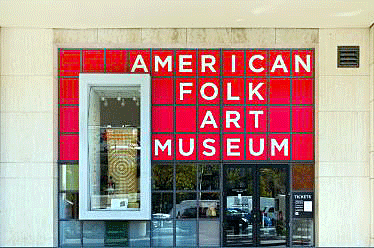
Folk Art Museum New York City presents an overview of folk art in
America. Folk
art has been around since man first began drawing on cave walls. It
evolved out of necessity, from primitive stone tools to baskets to
carrying things to decorating furniture to store things. The American
Folk Art Museum New York City presents an overview of folk art in
America.
Since its first incarnation in 1961—when it was known as the Museum of
Early American Folk Arts—the museum has focused on collecting,
displaying, and studying works in a variety of objects created by
self-taught American artists and artisans. But assembling its collection
and curating it presented challenges, one of which was its moving from
one venue to another along the way and another the changing of its name
twice.
 In
1966, the institution received its first name change to the Museum of
American Folk Art and then in 2001 to its second change to the American
Folk Art Museum, when it moved to a new purpose-built location in
Midtown Manhattan. The museum occupied that facility until 2011, when it
sold the building to the Museum of Modern Art. The collection returned
to its previous location in Lincoln Square, which it had occupied from
1989 to 2001. In
1966, the institution received its first name change to the Museum of
American Folk Art and then in 2001 to its second change to the American
Folk Art Museum, when it moved to a new purpose-built location in
Midtown Manhattan. The museum occupied that facility until 2011, when it
sold the building to the Museum of Modern Art. The collection returned
to its previous location in Lincoln Square, which it had occupied from
1989 to 2001.
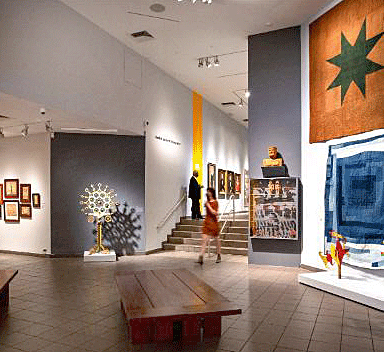
Visitors to the museum get to view objects in its permanent collection,
including Americana dating from the 17th century to the present day. The
collection ranges from weathervanes to more-traditional fine art, such
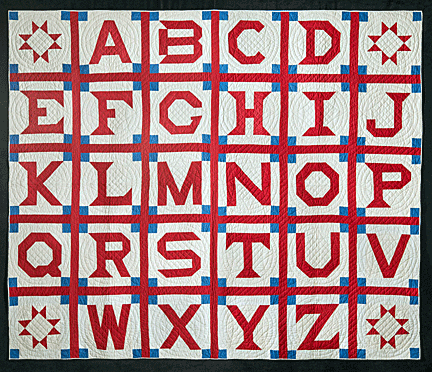
as paintings, drawings, and photographs. Textiles, quilts, sculptures,
and other three-dimensional pieces offer insights into various elements
of American cultural heritage.
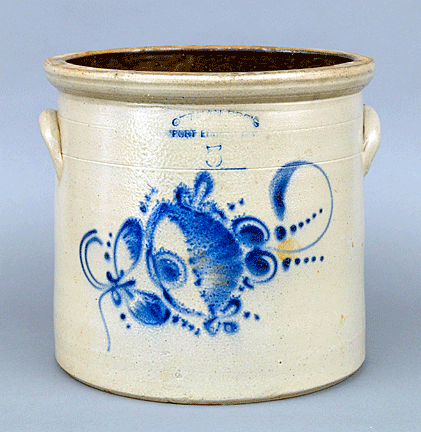 Since
1961, the American Folk Art Museum has been the leading institution
shaping the understanding of art by the self-taught members of a
community. It showcases the creativity of individuals whose singular
talents have been refined through personal experience rather than formal
artistic training. Its collection includes over 8,000 works of art from
the last 400 years and nearly every continent—from compelling portraits
and dazzling quilts to powerful works by living artists in a variety of
mediums. Since
1961, the American Folk Art Museum has been the leading institution
shaping the understanding of art by the self-taught members of a
community. It showcases the creativity of individuals whose singular
talents have been refined through personal experience rather than formal
artistic training. Its collection includes over 8,000 works of art from
the last 400 years and nearly every continent—from compelling portraits
and dazzling quilts to powerful works by living artists in a variety of
mediums.
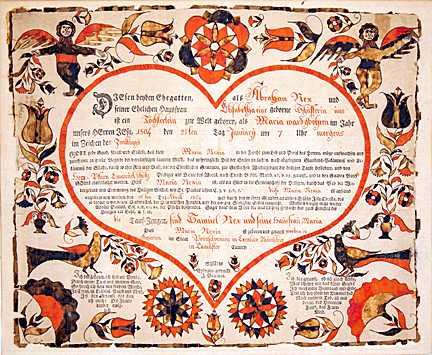 Self-taught
art, both past and present, tells empowering stories of everyday life.
Collectors, professional artists, critics, dealers, and curators first
defined the category of American folk art at the turn of the 20th
century, They had been searching for an authentic American art form
which seemed to be finally answered in works that presented a picture of
national identity, faith, progress, ingenuity, community, and
individuality. Under the umbrella of “folk art” the category expanded to
also include artists working in the present. For the last two decades,
the term self-taught has more regularly come to address these artists,
whose inspiration emerges from unsuspected paths and unconventional
places, giving voice to individuals who worked outside the social
mainstream. Self-taught
art, both past and present, tells empowering stories of everyday life.
Collectors, professional artists, critics, dealers, and curators first
defined the category of American folk art at the turn of the 20th
century, They had been searching for an authentic American art form
which seemed to be finally answered in works that presented a picture of
national identity, faith, progress, ingenuity, community, and
individuality. Under the umbrella of “folk art” the category expanded to
also include artists working in the present. For the last two decades,
the term self-taught has more regularly come to address these artists,
whose inspiration emerges from unsuspected paths and unconventional
places, giving voice to individuals who worked outside the social
mainstream.
The Museum is open from Wednesday to Sunday from 11:30 A.M. to 6:00 P.M.
<
Back to More Antiques to View
Next
Article >
|