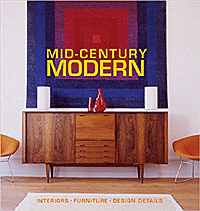
The 1950’s house was a scientific
triumph, designed in a laboratory and tested on inhabitants of all
ages before being built for the masses. Never had homes been so
thoroughly contemporary, with antiques and period styles entirely
banished. This video explores the interior decor of that decade.
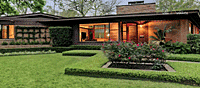
Explore the
Characteristics of Mid-Century Modern Architecture, one of the most
influential styles of the 20th century. Known for its clean lines,
flat planes, large glass walls, natural materials, and strong
indoor–outdoor connection, Mid-Century Modern design shaped the way
people think about modern living. Click on the
title to view.
And look for other videos in selected articles.
Can't find what
you're looking for? Go to
our Sitemap
Find
out what's coming in the
2026 Holiday
Edition
of
the
THE ANTIQUES ALMANAC
"Christmas in America"
COMING IN
December
Share pages
of this ezine with your friends using the buttons
provided with each article.
The morning of December 17, 1903 dawned bright with a
strong chill in the air. The wind hit 25 miles per hour
over the dunes at Kill Devil Hills, dangerous conditions
for flying a prototype aircraft. The Wright Brothers of
Dayton, Ohio, dressed in coats and ties to add a touch
of private ceremony for an event that would alter the
world. To learn more read "The
Dream of Flight."
Glossary of Ceramic Terms
Page
2
Matt glaze - A
dull glaze surface, not very reflective when fired which needs a
slow cooling period or it may turn shiny.
Mold - A plaster shape designed
to pour slip cast into and let dry so the shape comes out as an
exact replica of the mold.
Maturing point - The temperature
at which the clay becomes hard and durable.
Opaque glaze - A non-transparent
glaze which covers the clay or glaze below it.
Oxidation - Firing with a full
supply of oxygen. Oxides show bright colors.
Palette A range of colors used
in the decoration of ceramics.
Potter’s wheel A mechanical
wheel on which a potter throws clay pots.
Salt glaze A thin, glassy glaze
applied to some stoneware and produced by throwing salt into the
kiln at the height of firing. The glaze may show a pitted surface,
known as "orange peel"
Satin glaze - A glaze with
medium reflectance, between matt and gloss.
Slab - Pressed or rolled flat
sections of clay used in hand building.
Slip - Clay mixed with water
with a mayonnaise consistency that’s used in casting and decoration.
Slurry - A thick slip.
Sang-de-boeuf A brilliant red
ceramic glaze developed in early 18th-century China.
Scroddled A mottled pottery
fabricated from pieces of differently colored clays.
Sgraffito A form of ceramic
decoration incised through a colored slip, revealing the ground
beneath.
Shoulder The outward projection
of a vase under the neck or mouth.
Sleeve vase A tall vase of long
thin tubular shape.
Slip A smooth dilution of clay
and water used in the making and decoration of pottery.
Slip-casting The manufacture of
thin-bodied ceramic wares and figures by pouring slip into a mold.
Slip-trailing The application of
slip onto a ceramic form as a way of decorating the surface.
Solifleur A vase shaped with a
long slender neck, suitable for displaying a single cut flower or
bud.
Stoneware The type of pottery
fired at a higher temperature than earthenware, making it durable
and non-porous.
Studio pottery Pottery that has
been individually designed and crafted.
Tazza A large, shallow bowl on a
stemmed foot made in glass, silver, and ceramics from the 16th
century.
Transfer - The printing transfer
of an inked image from an engraved plate to paper or to a sheet
("bat') of tacky glue and from there to a ceramic object.
Transparent glaze - A glaze
which transmits light clearly.
Throwing The technique of
shaping ceramic vessels by hand on a rotating wheel.
Tin glaze A glassy glaze made
opaque by the addition of tin oxide and commonly used on
earthenware.
Underglaze A color or design
painted before the application of the glaze on a ceramic object.
Blue is the most common underglaze color.
Wreathing The spiraling indented
rings inside thrown pottery, left by the potter's fingers, or caused
by distortions during the firing process.
No antiques or collectibles
are sold on this site.
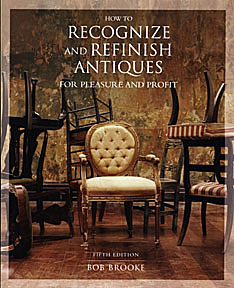
How to Recognize and
Refinish Antiques for Pleasure and Profit
Have
you ever bought an antique or collectible that was less than perfect and
needed some TLC? Bob's new book offers tips and step-by- step
instructions for simple maintenance and restoration of common antiques.
Read an
Excerpt
Auction News
Get up to the minute news of antiques auctions
around the country and the world.