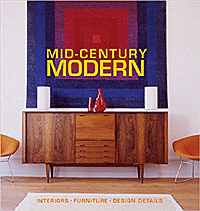
The 1950’s house was a scientific
triumph, designed in a laboratory and tested on inhabitants of all
ages before being built for the masses. Never had homes been so
thoroughly contemporary, with antiques and period styles entirely
banished. This video explores the interior decor of that decade.
Explore the
Characteristics of Mid-Century Modern Architecture, one of the most
influential styles of the 20th century. Known for its clean lines,
flat planes, large glass walls, natural materials, and strong
indoor–outdoor connection, Mid-Century Modern design shaped the way
people think about modern living. Click on the
title to view.
And look for other videos in selected articles.
Can't find what
you're looking for? Go to
our Sitemap
Find
out what's coming in the
2026 Holiday
Edition
of
the
THE ANTIQUES ALMANAC
"Christmas in America"
COMING IN
December
Share pages
of this ezine with your friends using the buttons
provided with each article.
The morning of December 17, 1903 dawned bright with a
strong chill in the air. The wind hit 25 miles per hour
over the dunes at Kill Devil Hills, dangerous conditions
for flying a prototype aircraft. The Wright Brothers of
Dayton, Ohio, dressed in coats and ties to add a touch
of private ceremony for an event that would alter the
world. To learn more read "The
Dream of Flight."
Punch to Win
by Bob Brooke
The
corner bar has always been a place for working class laborers to gather
after completing a long, tiring shifts at local factories. Every
afternoon, men and women would stop in from work for a drink before
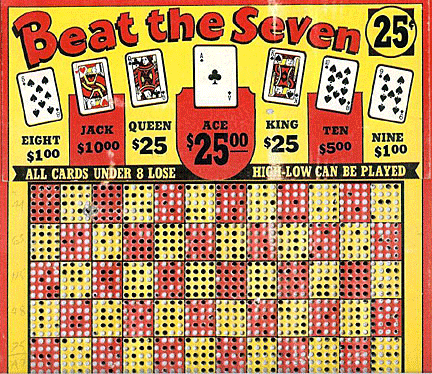
heading home for dinner. The bar owner would lay out several punchboards
on the bar. For the price of a penny to two bits (25 cents), a player
could take a chance to win up to $500. Using a stylus, the player pushed
the punch completely through the foil to dislodge a paper message
through the back of the board, which the player read, then collected his
winnings, but more often than not, discarded in disgust.
Punchboards
were an early form of lottery game boards used in the 18th century.
Though lotteries were as popular back then as they are today, they
required a large number of players to be profitable.
To enable one or several people to play, a local tavern owner would
construct a game board out of wood 8 inches square and half an inch
thick, then drill small holes in it and fill them with small rolled
pieces of paper on which he had written a number. He then covered the
holes with paper. After a customer bought a chance at the punchboard,
usually for a penny or a nickel, he would puncture one of the hole's
paper covers with a nail and retrieve the piece of paper with a number
on it. If the number matched those posted, the customer won a cash
prize.
As
time went on, tavern owners got greedy and realized they could punch the
holes with the biggest prizes and keep the money for themselves since
they had made the boards. If anyone asked who won the big prize, he
would just claim that it was a stranger and put a new board up the next
day. Some tavern owners went a step further and didn’t put any winning
numbers their boards. Players eventually caught on to this and stopped
playing punchboards.
C.A. Brewer and C.C. Scannell of Chicago patented the modern punchboard
in 1905.These new punchboards, made of cardboard, had paper covering
both the front and back of each hole to help prevent operators from
cheating. They came with a metal stylus and became popular purchases at
drugstores, bars, and barbershops, much like today’s lottery tickets
sold at convenience stores.
Although punchboards had been around for many years, they had never been
so available or so portable. Brewer and Scannell created their
punchboards so that one customer could play a lottery, with no
contribution necessary from anyone else. This enabled the punchboard's
owner/operator to sell chances to one customer at a time, and to
immediately tell how much he had won, without waiting for all the
punchboard numbers to be sold.
The
invention of board stuffing machines and ticket folding and plaiting
machines in the late 1910s allowed punchboard manufacturers to produce
them cheaply. From 1910 to 1915, they sold over 30 million punchboards.
The concept of the punchboard had been around for many years before
1905. Many bar and pool hall owners made their own punchboards,
drilling a few holes in a wooden board, then stuffed small pieces of
rolled paper into each hole. Unfortunately, the customer only had the
punchboard owner’s word that there was a winning number in at least one
of the remaining non-punched holes, a fact that often just wasn’t true.
Too often the owner/maker of the homemade punchboard would punch out the
winning hole for himself, or he wouldn’t even have bothered to put a
winning number in any hole. Profits from these homemade punchboards were
very high.
Many people soon realized these homemade punchboards were probably
fraudulent, thus the popularity of punchboarding declined. It took the
invention of punchboard manufacturing machines, which could cover both
sides of the board with a sheet of undamaged paper, to convince
customers to return to punchboard gambling.
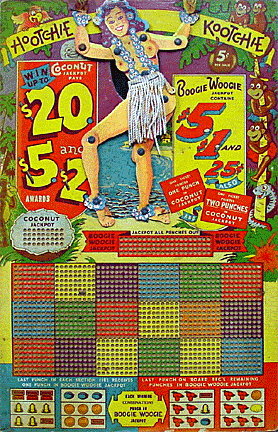
The
mass-production of punchboards led to a general standardization of
shapes and a standardization of the themes that helped identify
different manufacturers' boards. Although most boards were rectangular
in shape, their themes were unique. Some of the successful themes
featured drawings of shapely pinups, and titles that implied that
certain boards offered big payoffs, such as Win u Ruck, Barrel of
Winners, and Sweepstakes Parley. Some punchboards had themes featuring
racy drawings and titles such as Easy Double, Big Gusher, and Lady Your
Fat is Showing.
Some punchboards had as many as 10,000 holes, and some as few as 25.
Some paid out prizes instead of money, such as cigarettes, and some
guaranteed that everyone was a winner. But they all had one thing in
common—their calculated average gross profit or what the board's owner
could expect as his profit when he sold all the holes and gave out all
the prizes. Not had, in an era when lunch cost 25 cents and a gallon of
gas cost 10.
Punchboard
sales declined significantly after WWII, as many states made them
illegal. Many manufacturers attempted to disguise the gambling nature of
the boards by stating that prizes were "for trade only" and not
redeemable for cash. Cigarette, cigar, and beer companies used
punchboards as an advertising medium, featuring packages of cigarettes
or bottles of beer as prizes on their punchboards instead of cash. While
some of these boards were operated as advertising gimmicks, most were
still played for cash.
Despite the millions of punchboards produced, it’s difficult for
collectors to find non-punched or unusual punchboards because most were
simply thrown away when their original owner felt the board would no
longer sucker another coin from an unwitting player.
Punchboard prices range from a couple of dollars far a board with
dog-eared edges and faded colors, up to several hundred dollars for a
non-punched board in pristine condition. As with most collectibles,
condition is important in a punch-board's cost. And some punchhoard
themes have remained consistently more desirable, therefore more costly.
Though there have been numerous lottery-type games invented over the
years, non fired the imagination o f gamblers and collectors like the
punchboard.
No antiques or collectibles
are sold on this site.
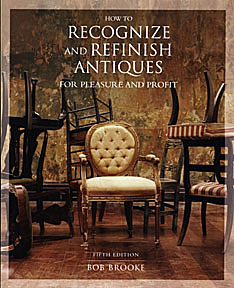
How to Recognize and
Refinish Antiques for Pleasure and Profit
Have
you ever bought an antique or collectible that was less than perfect and
needed some TLC? Bob's new book offers tips and step-by- step
instructions for simple maintenance and restoration of common antiques.
Read an
Excerpt
Auction News
Get up to the minute news of antiques auctions
around the country and the world.


























 The
corner bar has always been a place for working class laborers to gather
after completing a long, tiring shifts at local factories. Every
afternoon, men and women would stop in from work for a drink before
heading home for dinner. The bar owner would lay out several punchboards
on the bar. For the price of a penny to two bits (25 cents), a player
could take a chance to win up to $500. Using a stylus, the player pushed
the punch completely through the foil to dislodge a paper message
through the back of the board, which the player read, then collected his
winnings, but more often than not, discarded in disgust.
The
corner bar has always been a place for working class laborers to gather
after completing a long, tiring shifts at local factories. Every
afternoon, men and women would stop in from work for a drink before
heading home for dinner. The bar owner would lay out several punchboards
on the bar. For the price of a penny to two bits (25 cents), a player
could take a chance to win up to $500. Using a stylus, the player pushed
the punch completely through the foil to dislodge a paper message
through the back of the board, which the player read, then collected his
winnings, but more often than not, discarded in disgust.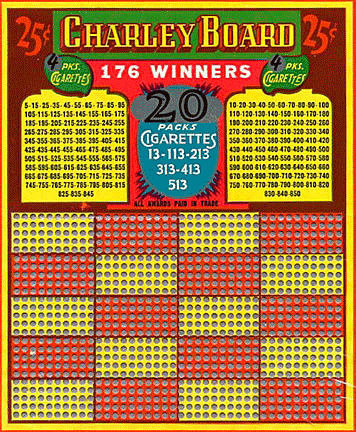 Punchboards
were an early form of lottery game boards used in the 18th century.
Though lotteries were as popular back then as they are today, they
required a large number of players to be profitable.
Punchboards
were an early form of lottery game boards used in the 18th century.
Though lotteries were as popular back then as they are today, they
required a large number of players to be profitable. 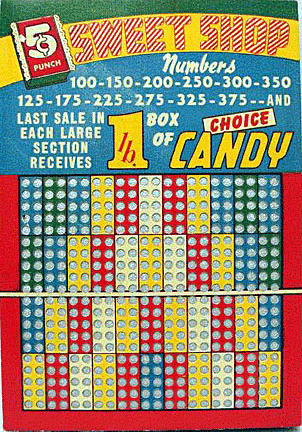 As
time went on, tavern owners got greedy and realized they could punch the
holes with the biggest prizes and keep the money for themselves since
they had made the boards. If anyone asked who won the big prize, he
would just claim that it was a stranger and put a new board up the next
day. Some tavern owners went a step further and didn’t put any winning
numbers their boards. Players eventually caught on to this and stopped
playing punchboards.
As
time went on, tavern owners got greedy and realized they could punch the
holes with the biggest prizes and keep the money for themselves since
they had made the boards. If anyone asked who won the big prize, he
would just claim that it was a stranger and put a new board up the next
day. Some tavern owners went a step further and didn’t put any winning
numbers their boards. Players eventually caught on to this and stopped
playing punchboards.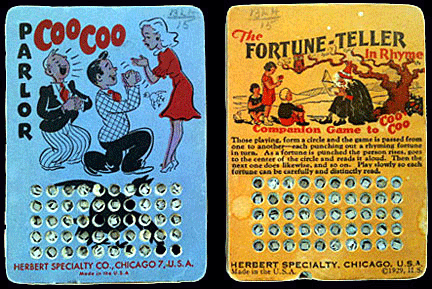 The
invention of board stuffing machines and ticket folding and plaiting
machines in the late 1910s allowed punchboard manufacturers to produce
them cheaply. From 1910 to 1915, they sold over 30 million punchboards.
The
invention of board stuffing machines and ticket folding and plaiting
machines in the late 1910s allowed punchboard manufacturers to produce
them cheaply. From 1910 to 1915, they sold over 30 million punchboards.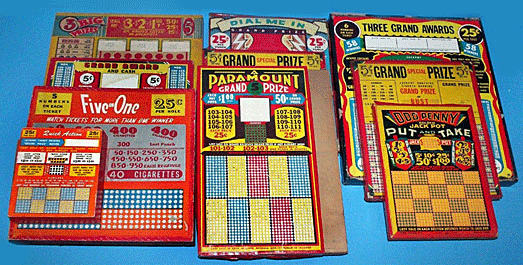
 The
mass-production of punchboards led to a general standardization of
shapes and a standardization of the themes that helped identify
different manufacturers' boards. Although most boards were rectangular
in shape, their themes were unique. Some of the successful themes
featured drawings of shapely pinups, and titles that implied that
certain boards offered big payoffs, such as Win u Ruck, Barrel of
Winners, and Sweepstakes Parley. Some punchboards had themes featuring
racy drawings and titles such as Easy Double, Big Gusher, and Lady Your
Fat is Showing.
The
mass-production of punchboards led to a general standardization of
shapes and a standardization of the themes that helped identify
different manufacturers' boards. Although most boards were rectangular
in shape, their themes were unique. Some of the successful themes
featured drawings of shapely pinups, and titles that implied that
certain boards offered big payoffs, such as Win u Ruck, Barrel of
Winners, and Sweepstakes Parley. Some punchboards had themes featuring
racy drawings and titles such as Easy Double, Big Gusher, and Lady Your
Fat is Showing.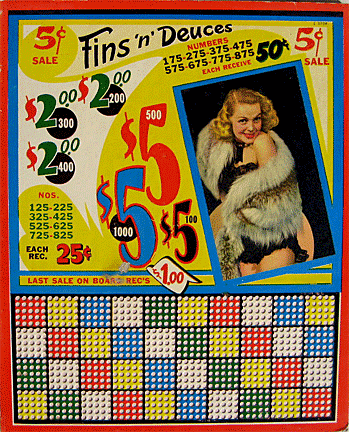 Punchboard
sales declined significantly after WWII, as many states made them
illegal. Many manufacturers attempted to disguise the gambling nature of
the boards by stating that prizes were "for trade only" and not
redeemable for cash. Cigarette, cigar, and beer companies used
punchboards as an advertising medium, featuring packages of cigarettes
or bottles of beer as prizes on their punchboards instead of cash. While
some of these boards were operated as advertising gimmicks, most were
still played for cash.
Punchboard
sales declined significantly after WWII, as many states made them
illegal. Many manufacturers attempted to disguise the gambling nature of
the boards by stating that prizes were "for trade only" and not
redeemable for cash. Cigarette, cigar, and beer companies used
punchboards as an advertising medium, featuring packages of cigarettes
or bottles of beer as prizes on their punchboards instead of cash. While
some of these boards were operated as advertising gimmicks, most were
still played for cash.