Thirst For Antique
Knowledge Draws Sell-out Crowd
to Smithsonian Seminar
by Bob Brooke
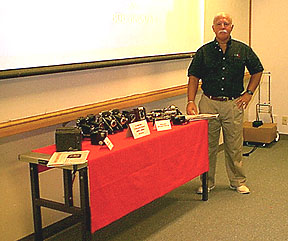 It
was over 100 degrees on the Mall in Washington, DC. on Saturday, August
3. The humidity had climbed to near 100 percent. But three stories
underground in the cool comfort of the Smithsonian Institution’s S.
Dillon Ripley Center, 70 devoted antique fans sought refuge from the
intense heat by participating in a six-hour seminar, Collecting
Affordable Antiques and Fine Art, given by AntiqueWeek
feature writer Bob Brooke as part of the Smithsonian Associates
Program. It
was over 100 degrees on the Mall in Washington, DC. on Saturday, August
3. The humidity had climbed to near 100 percent. But three stories
underground in the cool comfort of the Smithsonian Institution’s S.
Dillon Ripley Center, 70 devoted antique fans sought refuge from the
intense heat by participating in a six-hour seminar, Collecting
Affordable Antiques and Fine Art, given by AntiqueWeek
feature writer Bob Brooke as part of the Smithsonian Associates
Program.
The Smithsonian
Associates offers a variety of educational programs and study tours that
open the doors to the Smithsonian's world of opportunity. Topics,
offered by the leaders of contemporary thought, range from the latest
discoveries in astrophysics to the delights of regional cuisine.
Established over 30 years ago as the membership, cultural, and
educational arm of the Smithsonian Institution, The Smithsonian
Associates is recognized as the world's largest and most esteemed
museum-based continuing education and study tour program.
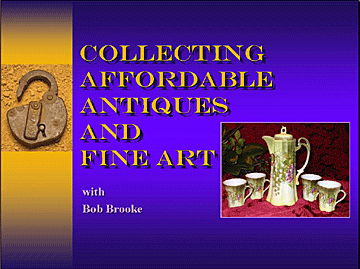
Brooke began the program
with a computerized presentation which showed participants the
difference between antiques and collectibles. He then went on to discuss
where to buy antiques, including comments on buying from dealers, at
shows and at auctions.
Participants seemed to be
particularly interested in how dealers determined prices for antiques,
as well as what determines value. When asked what makes a good
buy, Brooke said "what pleases the collector’s eye and is affordable."
Affordability was the
theme of the seminar, and it was most likely the word
"affordable" which brought a relatively young–average age
35-40–audience to it. Participants seemed anxious to know how they
could begin collecting without spending a small fortune.
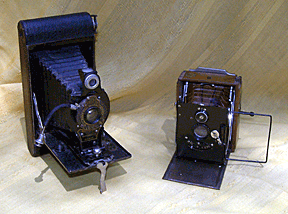 Brooke stressed the
importance of being an educated collector, learning as much as possible
about a particular type of antique or collectible. He discussed various
ways to learn about antiques, including visiting historic restorations
and museums, reading books and periodicals like AntiqueWeek. He
then discussed how to assemble, display and protect a collection. Brooke stressed the
importance of being an educated collector, learning as much as possible
about a particular type of antique or collectible. He discussed various
ways to learn about antiques, including visiting historic restorations
and museums, reading books and periodicals like AntiqueWeek. He
then discussed how to assemble, display and protect a collection.
The seminar continued with
a discussion
of furniture. Beginning
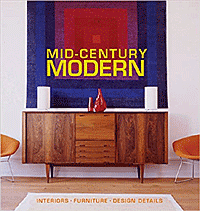
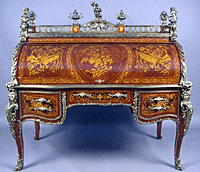
with Victorian furniture, his specialty, he discussed the many styles,
especially emphasizing the "revivals." He said that because
there’s no such thing as a single Victorian style, identification of
Victorian pieces is more complicated.
Brooke stressed how high-end examples carry the elements of style for a
particular period, but that mass-produced pieces are more affordable. He
also discussed various designers and retailers such as Herter Brothers
of New York.
Brooke noticed that participants were particularly influenced by the Antiques
Roadshow–at least 85 percent of them watch it regularly. His goal in
conducting this seminar was to dispel some of the myths of the show.
The third session of the
seminar dealt with decorative accessories from the Victorian to the
Atomic Age, including a discussion of potter and porcelain. Brooke
showed participants how the Industrial Revolution and
the emergence of a middle-class market in the 19th century, as well as
new materials and manufacturing techniques in the 20th century, affected
design. By showing examples of dinnerware, utensils, glassware and art
pottery, he was able to give the audience a good introduction into this
wide-ranging and sometimes complicated area of antique collecting.
The seminar’s last
session offered a brief overview of collecting 19th and early 20th-century art, including paintings done "in the
school or style of" a particular artist, engravings and etchings
such as those of Currier and Ives, sculptures like those of John Rogers,
and photographs of Wallace Nutting.
Throughout the day, Brooke
emphasized value in his discussions. As a collector, Brooke related
his personal experiences in buying and selling antiques.
Bob Brooke has been
writing about antiques for the past 17 years and has collected a variety
of items for the last 30. This antiques Web site, The Antiques Almanac, is
fast becoming one of the leading antiques information sites on the
Internet. Besides AntiqueWeek, he articles also appear on various
antique Web sites. He also contributes articles on antiques and
collectibles to
HowMuchisItWorth.com.
Brooke
is available
to conduct this seminar or variations of it or others on separate
antique topics. Contact him by E-mail.
Ask about All About Antiques, a four-session course for antiques
lovers.
Learn more about the
Smithsonian Associates
Program.
< Back
to About Page
|