|
Thank the Romans for Fast
Food
by Bob Brooke
Most people today believe that the concept of fast food began in the mid
20th century. In fact, it goes back well over 2,000 years to ancient
Rome. Beginning with hamburger stands in the 1950s, the concept of
today’s fast food has exploded into a variety of outlets, including
franchises selling everything from hamburgers to an assortment of
chicken dishes to food trucks to food delivery services, selling almost
any kind of food imaginable—all prepared and cooked for others to eat
without the bother of cooking and cleaning up.
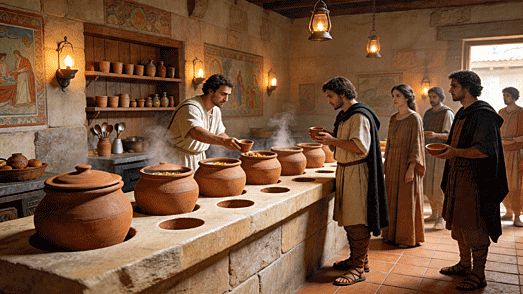
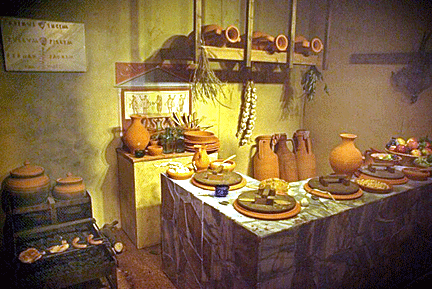
And so it was also for the ancient Romans, except they called their
outlets thermopolia—fast food shops and stalls selling all sorts of
foods—to be eaten while standing at a counter or taken back home to eat.
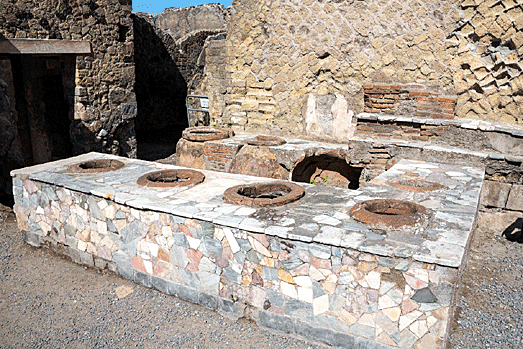
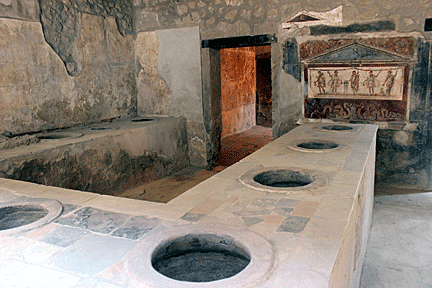 Most
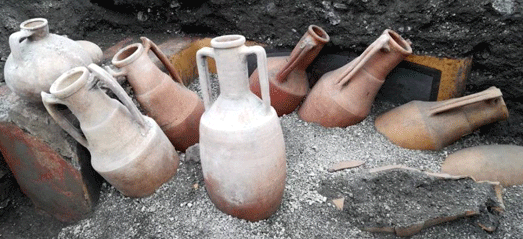
thermopolia had a straight or L-shaped food counter into which sat six
large earthenware jars, called dola, filled with tempting delicacies
such as beans, chickpeas, and dried fruits, from which customers could
purchase prepared food, often from an open-fronted shop facing directly
onto the street. Some dola may have had stored grain, nuts, dried
legumes, wine, or other ingredients rather than cooked food kept
permanently warm. Most
thermopolia had a straight or L-shaped food counter into which sat six
large earthenware jars, called dola, filled with tempting delicacies
such as beans, chickpeas, and dried fruits, from which customers could
purchase prepared food, often from an open-fronted shop facing directly
onto the street. Some dola may have had stored grain, nuts, dried
legumes, wine, or other ingredients rather than cooked food kept
permanently warm.
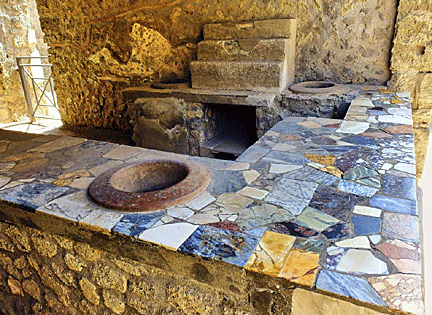 A
customer could approach from the street, speak to the seller across the
counter, pay for a small portion of food or drink, and eat nearby or
carry the food away. Some thermopolia were very small, while others had
back rooms, storage spaces, or seating areas. A few were decorated with
painted panels, religious images, or advertisements, which suggests that
these establishments weren’t always bare, miserable places but active
commercial spaces that tried to attract customers’ attention and repeat
business. A
customer could approach from the street, speak to the seller across the
counter, pay for a small portion of food or drink, and eat nearby or
carry the food away. Some thermopolia were very small, while others had
back rooms, storage spaces, or seating areas. A few were decorated with
painted panels, religious images, or advertisements, which suggests that
these establishments weren’t always bare, miserable places but active
commercial spaces that tried to attract customers’ attention and repeat
business.
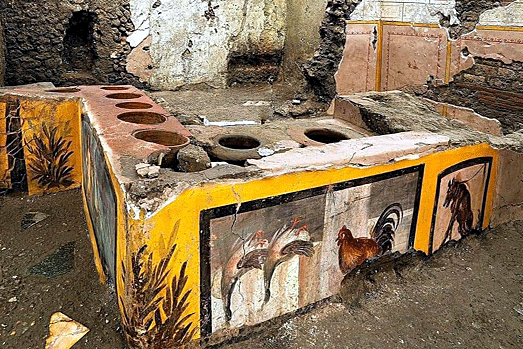
 Fancier
thermopolia would also be decorated with frescoes. These frescoes
depicted a range of Roman mythological and religious imagery, as well as
images and scenes of day to day life in the ancient city. Like modern
advertisement, thermopolia frescoes were not only artistically oriented,
they served a practical function. The images depicted in fresco could
signify what that thermopolium was selling—fish, poultry, baked goods,
etc. Thermopolia frescoes grabbed the customers’ attention much like
advertising signs to today. Fancier
thermopolia would also be decorated with frescoes. These frescoes
depicted a range of Roman mythological and religious imagery, as well as
images and scenes of day to day life in the ancient city. Like modern
advertisement, thermopolia frescoes were not only artistically oriented,
they served a practical function. The images depicted in fresco could
signify what that thermopolium was selling—fish, poultry, baked goods,
etc. Thermopolia frescoes grabbed the customers’ attention much like
advertising signs to today.
Others were faced with colored plaster, marble fragments, or painted
decoration, giving even a small shop a more attractive public face.
Decoration could be practical as well as ornamental. Painted images
might signal what was sold, appeal to the gods, or simply make the shop
memorable in a crowded street where many businesses competed for
attention.
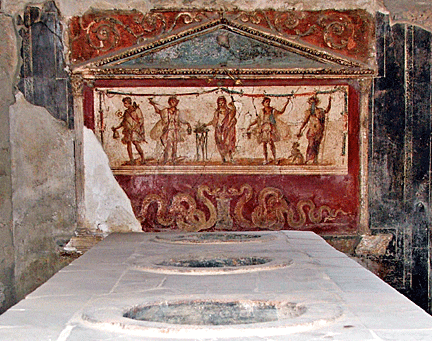 Against
the back wall was a grand aedicule, serving as a lararium for the
household gods—those Lares, alongside the protective spirit dubbed
Genius, the shrewd Mercury, god of commerce, and Dionysus, the god of
wine. Just a stone's throw from this bustling food stop was the owner’s
private abode, complete with its own entrance and a lush garden in which
he grew aromatic herbs, ensuring that every dish was full of flavor. Against
the back wall was a grand aedicule, serving as a lararium for the
household gods—those Lares, alongside the protective spirit dubbed
Genius, the shrewd Mercury, god of commerce, and Dionysus, the god of
wine. Just a stone's throw from this bustling food stop was the owner’s
private abode, complete with its own entrance and a lush garden in which
he grew aromatic herbs, ensuring that every dish was full of flavor.
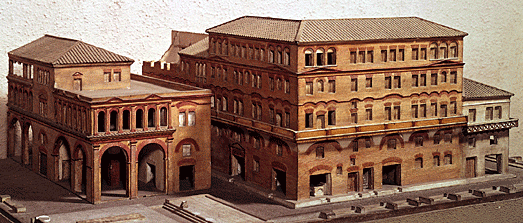
The thermopolium’s regular customers were the residents who lived in the
nearby insulae—Roman apartment buildings—especially those living on the
upper floors. Most didn’t have cooking facilities, so many would
frequent one of the many thermopolia. The seller usually knew which
customers wanted wine, which wanted something cheap and filling, and
which wanted to bargain or linger too long.
 The
popularity of thermopolia was closely linked to the realities of Roman
housing. Many urban residents didn’t live in spacious houses with
well-equipped kitchens, storerooms, servants, and dining rooms. In
cities, poorer residents often lived in rented rooms on the upper floors
of Roman insulae, where cooking could be inconvenient, smoky, cramped,
or dangerous. A small charcoal brazier might be possible, but a proper
kitchen wasn’t guaranteed, and open flame in a crowded apartment block
brought an obvious risk of fire. The
popularity of thermopolia was closely linked to the realities of Roman
housing. Many urban residents didn’t live in spacious houses with
well-equipped kitchens, storerooms, servants, and dining rooms. In
cities, poorer residents often lived in rented rooms on the upper floors
of Roman insulae, where cooking could be inconvenient, smoky, cramped,
or dangerous. A small charcoal brazier might be possible, but a proper
kitchen wasn’t guaranteed, and open flame in a crowded apartment block
brought an obvious risk of fire.
Fuel was costly and preparing even simple food required time, utensils,
storage, and water. A person working long hours in a shop, workshop,
port, construction site, market, or household might find it easier to
buy a hot dish, a cup of wine, or bread with something savory than to
prepare a meal from scratch.
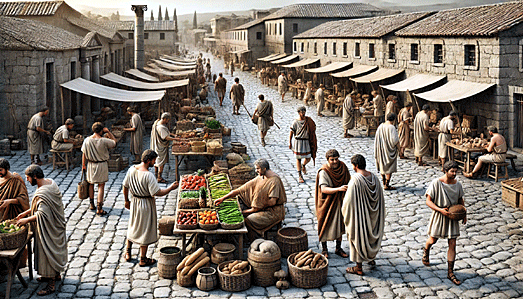
 Roman
thermopolia complemented markets, bakeries, wine shops, taverns, and
street stalls. The Roman city was full of small transactions, and food
was often bought in modest quantities for lack of storage. A customer
might buy bread from one place, wine from another, a hot snack from a
counter, and a few vegetables or olives from a stall in the open-air
market. Thus, thermopolia were part of a wider food network rather than
isolated curiosities. Roman
thermopolia complemented markets, bakeries, wine shops, taverns, and
street stalls. The Roman city was full of small transactions, and food
was often bought in modest quantities for lack of storage. A customer
might buy bread from one place, wine from another, a hot snack from a
counter, and a few vegetables or olives from a stall in the open-air
market. Thus, thermopolia were part of a wider food network rather than
isolated curiosities.
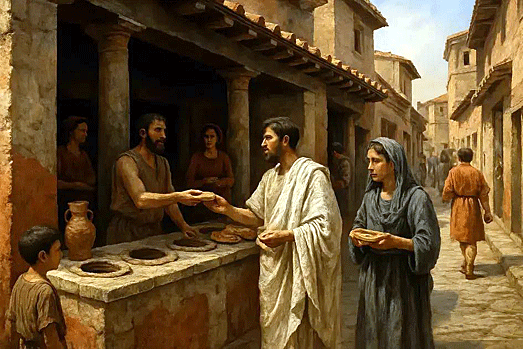
A prepared-food counter could serve a laborer on a break, a traveler
arriving late, a shopkeeper who could not leave his premises for long,
or a resident whose rented room offered no place to cook. Some
establishments had seating areas where customers could linger, while
others were more like takeaway counters.
Unlike modern fast-food outlets, thermopolia weren’t standardized
franchises with a fixed menu and uniform branding. Each one depended on
its location, owner, local customers, nearby businesses, available
ingredients, and the money people in the neighborhood were willing to
spend.
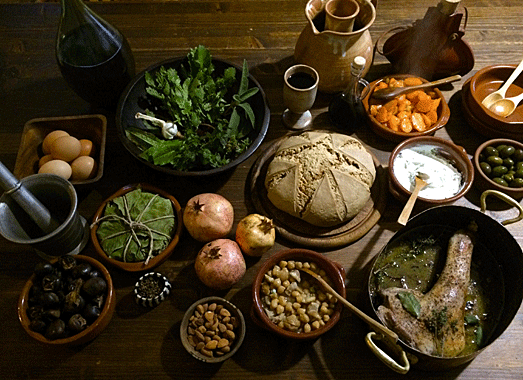
The exact menu of a thermopolium varied. Unfortunately, the
archaeological evidence doesn’t always allow reconstruction of every
dish with confidence. And recipes were usually vague. The types of foods
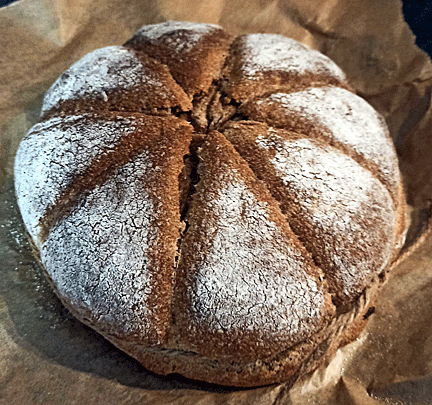
most likely sold at thermopolia included bread, stews, legumes, olives,
cheese, eggs, sausages, preserved fish, fruit, nuts, watered wine, warm
drinks, and simple hot dishes.
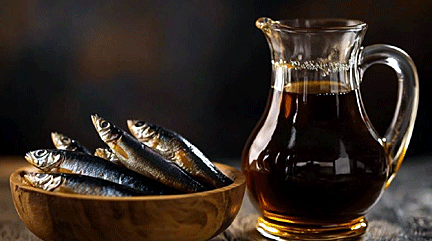
Thermopolia owners made humble food more appealing by adding salt,
herbs, vinegar, oil, and sauces. Garum and other fish sauces were common
features of Roman cuisine, and cheaper versions may have flavored
ordinary food as well as elite dishes. Olive oil, too, could soften
bread, enrich vegetables, and make legumes more satisfying, especially
in regions where olives and olive oil were available.
The food wasn’t luxurious, but it was immediate. It could be eaten at
the counter, in a back room, outside in the street, or carried away to a
workplace.
To read
more of my articles, please
visit
my Web site.
< Back
to Antiquities Archives
Next Article > |